Why power and cycle life matter
Energy optimization applications require batteries that can handle frequent daily cycling, high power exchange, and continuous operation over a vessel’s lifetime.
For marine batteries, cycle life can matter more than capacity
Choosing a battery for a merchant vessel is not simply a question of how many kilowatt-hours can be fitted onboard.
For applications such as spinning reserve, peak shaving and generator load optimization, the battery may charge and discharge repeatedly throughout the day. That makes power capability and cycle life as important as energy capacity.
Lithium titanate oxide, or LTO, batteries are particularly suited to this type of operation. Unlike a battery installed primarily as backup capacity, an energy-optimization battery system becomes an active part of the vessel’s power system, continuously absorbing and supplying power as operating conditions change.
That duty places different demands on the battery. High charge and discharge rates are required, while degradation over thousands of cycles can determine whether the economics remain viable beyond the first years of operation.
Echandia’s LTO battery systems can support typical service lives of 15–20 years in demanding applications.
That does not make LTO the automatic choice for every vessel. NMC and LFP batteries may be sufficient for more moderate operating profiles. Selection should instead start with the vessel’s load characteristics, cycling requirements and the balance between power and energy demand.
Integration is equally important. The battery system has to work with the battery management and power management systems as well as with the vessel’s electrical architecture. Simply installing battery capacity does not by itself deliver savings.
For owners assessing hybridization, the useful question may therefore be less “How large should the battery be?” and more “What job will it perform every day?”
That distinction can determine both the chemistry required and whether the investment pays off.
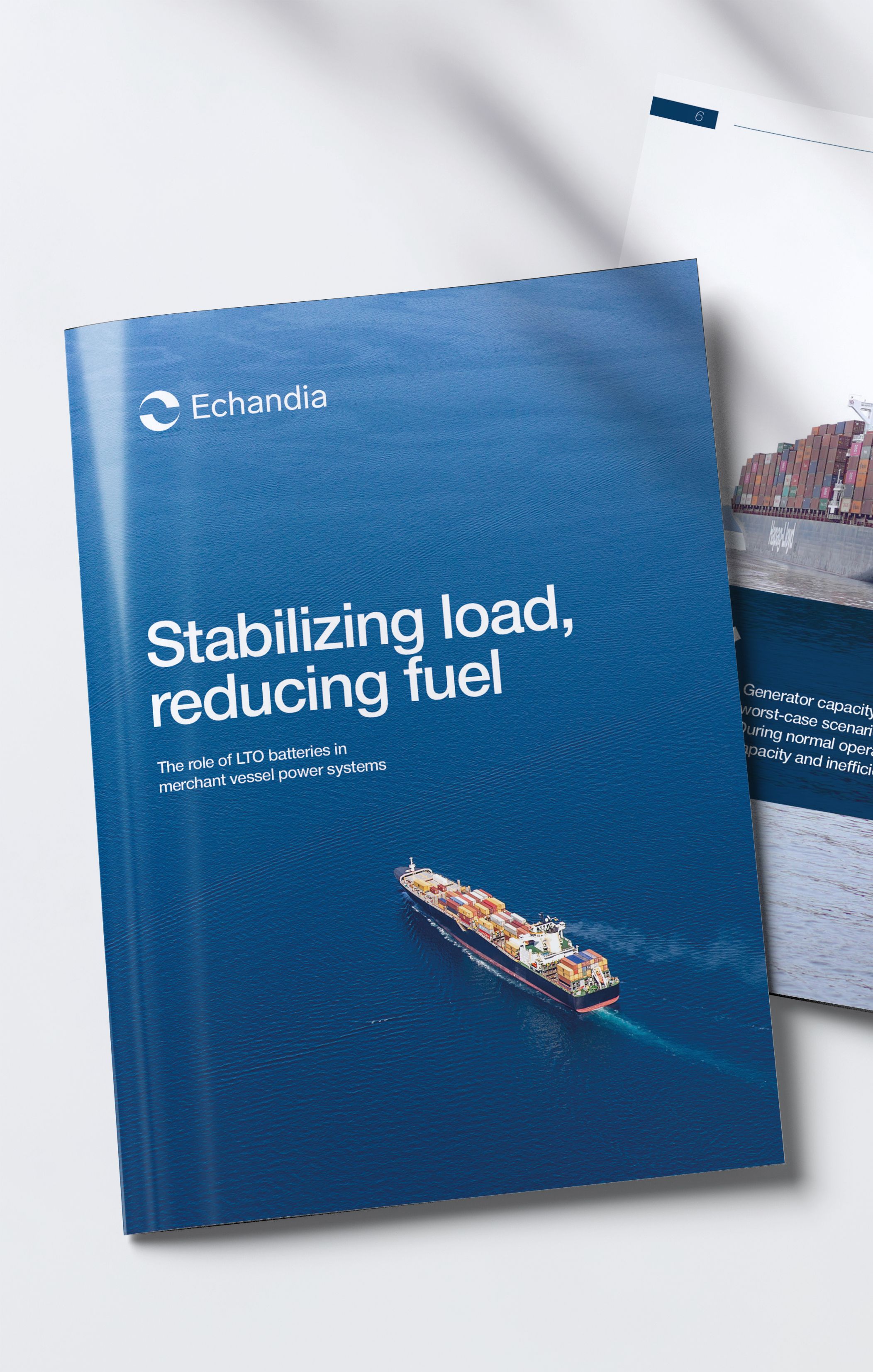
Download our whitepaper
Learn more about how batteries can reduce fuel consumption and generator running hours in our new report.