
Batteries target shipping’s low-load fuel penalty
Marine batteries are often discussed as an alternative source of propulsion, especially for ferries or short shipping routes. On larger merchant vessels, one of their more immediate uses may be less ambitious: helping diesel generators work more efficiently.
Battery-supported generator optimization cuts fuel consumption
Marine power systems are conventionally sized for peak demand and redundancy. In everyday operation, that can leave several generators running well below their most efficient load.
Four-stroke generators operating below roughly 40% load can face a fuel-consumption penalty of 10–15% compared with operating nearer their optimum. The problem is particularly relevant when vessels keep additional generators online as spinning reserve to hedge against sudden load changes or equipment failure.
A battery changes the equation by providing that reserve electrically. It can respond to a sudden demand increase or generator trip, allowing fewer engines to run during normal operation.
The same battery can also absorb short power peaks and variations in hotel or auxiliary loads. Instead of generators continuously following those fluctuations, they can operate at a steadier and generally higher load.
Echandia estimates that battery-supported optimization can cut fuel consumption from auxiliary four-stroke generator sets by around 10–15%, depending on the vessel type and operating profile.
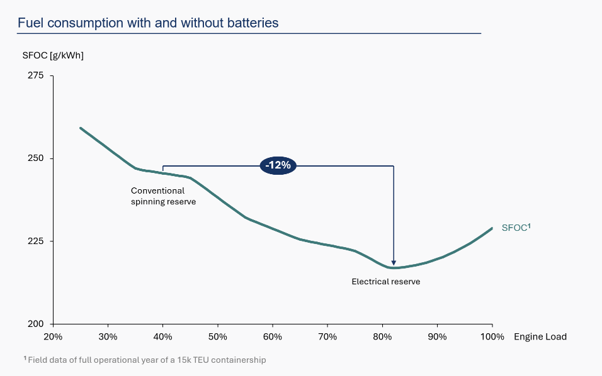
The potential is illustrated by operational data from a 15,000 TEU containership. Its auxiliary engines consumed about 245 g/kWh at low load, compared with 217 g/kWh at optimum.
Learn more about how batteries can reduce fuel consumption and generator running hours in our white paper.
Download our whitepaper
Learn more about how batteries can reduce fuel consumption and generator running hours in our new report.
Related insight
February 11, 2026
Peak shaving and other hybrid ways to use batteries on a vessel
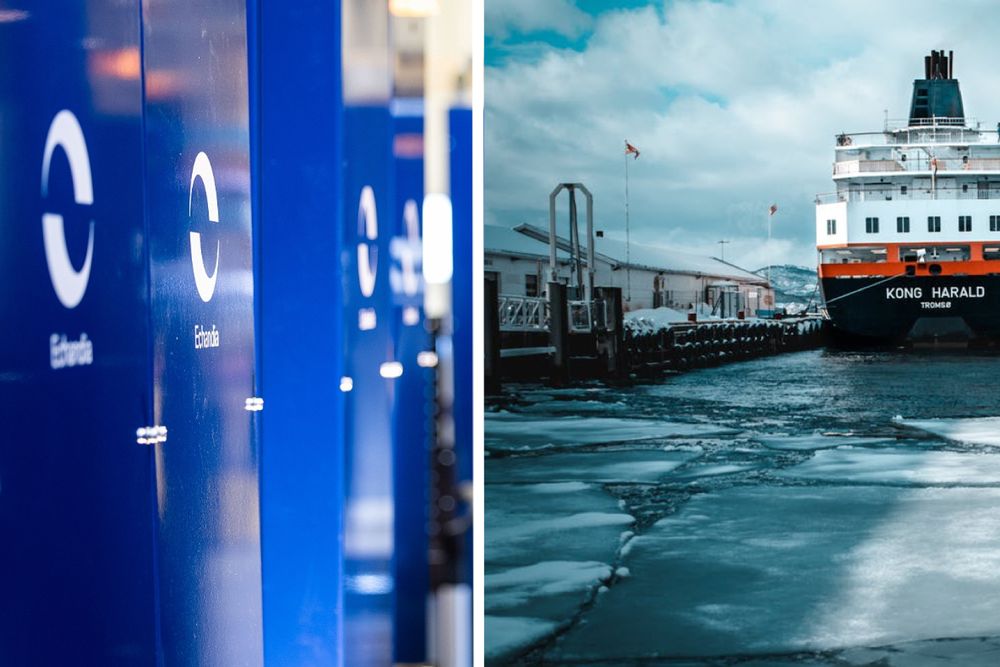
Improving energy efficiency and reducing fuel consumption have become some of the most critical challenges for shipowners and operators, driven by increasingly stringent regulatory requirements. For larger, ocean-going vessels, batteries can perform several important functions that reduce fuel consumption and improve overall energy efficiency. These functions typically include peak shaving, spinning reserve, energy harvesting, and backup power (UPS), as described below.
February 11, 2026
Marine battery systems, less is more
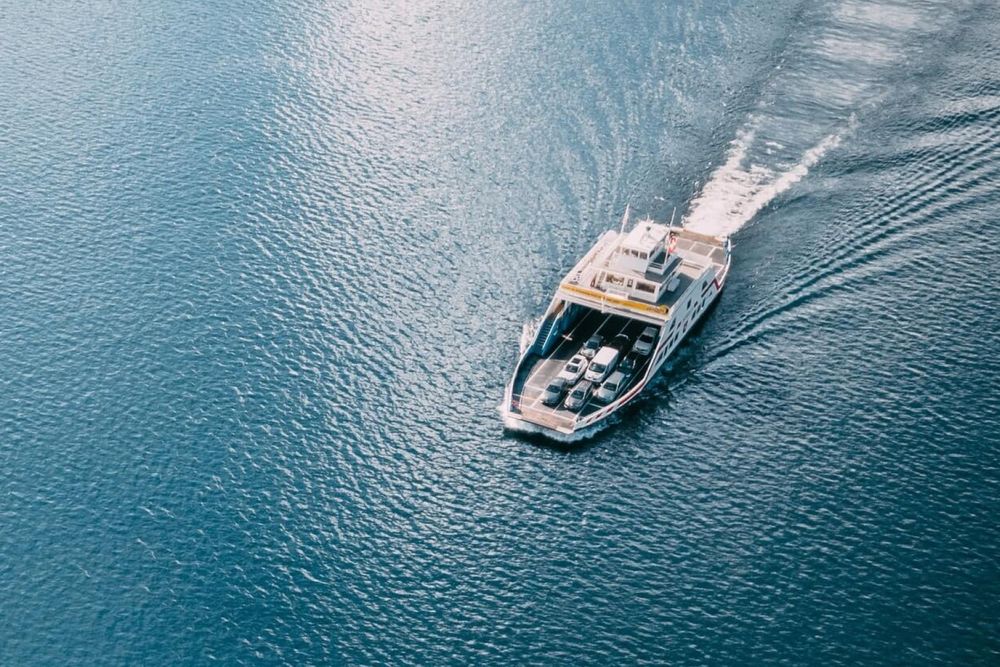
A common misconception surrounding LTO-based marine battery systems is that they are heavier and require more space than alternative solutions. This perception largely stems from evaluating batteries at cell level, rather than at system level. When assessed from a system perspective, LTO chemistry can in fact enable battery systems that are both smaller and lighter.